Targeted Protein Degradation
Expand your TPD Horizons with the strategic design, Advanced Synthesis and Analytical Expertise
In the dynamic field of Targeted Protein Degradation (TPD), the precision and innovation behind the design of right compounds, chemical synthesis and analysis are paramount. At Taros, we’re not just offering services, we’re providing solutions engineered with the highest scientific rigor and cutting-edge technology.
What we offer
1. Custom PROTAC Synthesis
Leveraging state-of-the-art synthetic routes to create custom-made PROTAC molecules with optimal properties for targeted degradation. Whether to find the precise exit vector for a target protein, select a suitable E3 ligase, or to devise an appropriate linker with the right balance of physico-chemical properties & length, we apply the learnings from experience to help accelerate your projects.
2. Innovative Molecular Glue Development:
Our capabilities extend to the design and synthesis of novel molecular glues, facilitating unique ligase-target protein interactions. One of our scientists is named inventor in a client’s patent for a molecular glue recently nominated for further development.
3. Comprehensive Medicinal Chemistry
Our team’s deep expertise in medicinal chemistry ensures the strategic optimization of lead compounds for enhanced TPD efficacy. Our proficient team can help develop Structure-Activity-Relationship based on the intepretation of various biological and DMPK data in real time and be able to optimize leads with minimal number of DMTA cycles.
Expanding our services to include
Cutting edge capabilities
Specialized Synthesis Techniques
From complex chiral synthesis to high-purity PROTACs and Molecular Glues construction, our laboratory is equipped to tackle the most challenging synthesis demands
Our analytical suite, featuring thr latest in mass spectrometry and chromotography, provides unmatched insight into compound structure and purity
Transform your challenges into opportunities
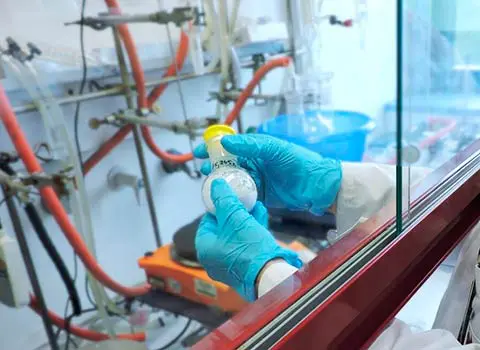
In Medicinal Chemistry research, we are working with a broadly experienced team on all biomolecular targets from any gene family in any therapeutic area. Our expertise…
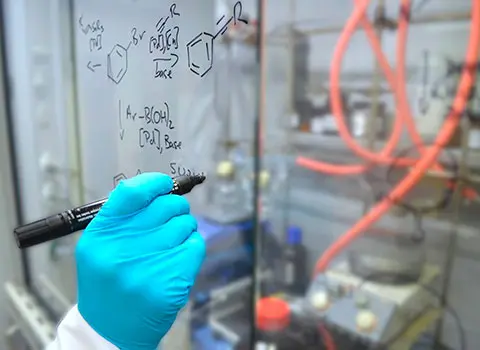
Complex, multi-step or enantioselective custom synthesis for industrial or research applications is our core competency. As a part of our chemistry services the…
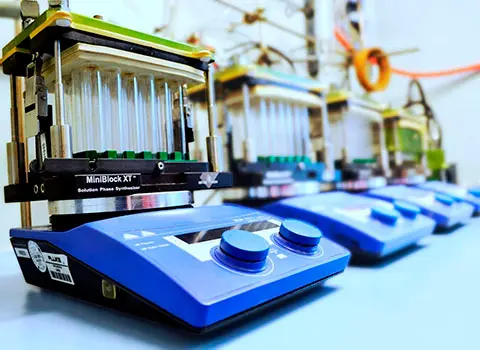
Quality library design requires creativity and profound synthesis knowledge to achieve the highest possible molecular diversity. Our efficient production process reduces…
Frequently Asked Questions
What targeted protein degradation services does Taros provide?
Taros supports targeted protein degradation programmes through the design and synthesis of custom PROTACs, partial PROTACs, molecular glues, specialised linkers and functionalised target or E3-ligase binders. The chemistry team can support projects from early feasibility and building-block preparation through analogue synthesis, linker optimisation and the production of material for biological evaluation.
How does Taros approach PROTAC design and synthesis?
A PROTAC programme requires the selection of a suitable target-protein ligand, an E3-ligase recruiter and a linker that places both components in an effective spatial arrangement. Taros evaluates factors such as the exit vector, linker length and composition, physicochemical properties, synthetic accessibility and the stability of the final degrader when developing custom PROTAC molecules.
Does Taros support molecular glues and linker development?
Yes. Taros provides chemistry support for molecular glues and custom linker systems, including the synthesis of different linkers, spacers and PEG-based components. The team can prepare degrader analogues with variations in linker length, attachment position and composition to support structure–activity and degradation studies.